
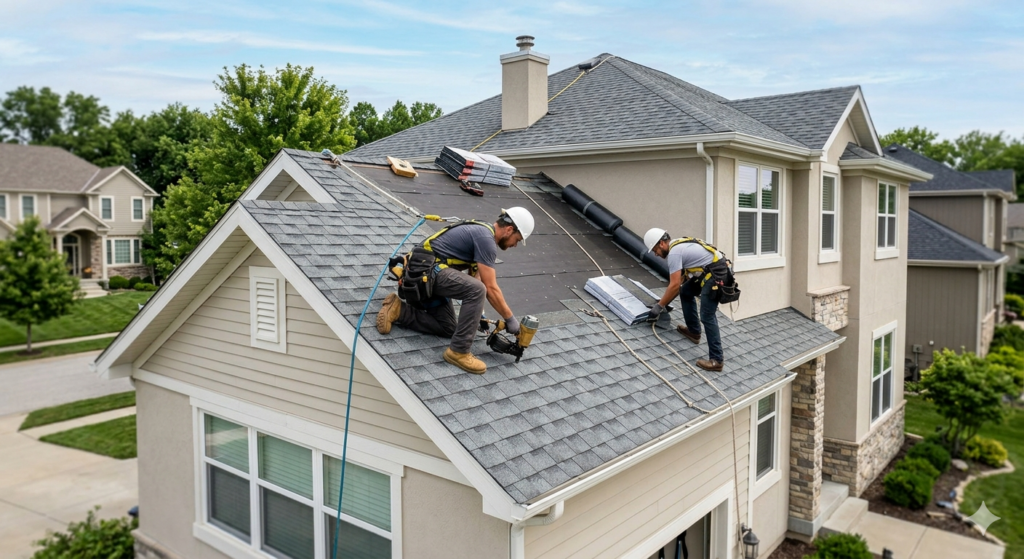
Residential roof damage in Jennings, LA is most commonly caused by wind uplift, prolonged moisture exposure, flashing failure, and storm-related debris impact. Professional roof repair services help homeowners prevent structural deterioration, interior water intrusion, insulation damage, and long-term roofing system failure when repairs are performed early and according to regional weather conditions.
Daigle Roofing and Construction works with homeowners throughout Southern Louisiana to evaluate storm-related roof damage, identify active leak sources, and implement repair solutions designed for long-term weather resistance and structural protection.
Why Are Roof Repair Services Important After Storm Damage in Jennings, LA?
Storm-related roof damage often continues to worsen after the weather event has passed. Even minor openings in a roofing system can allow water intrusion that damages decking, insulation, ceilings, and wall assemblies over time.
In Jennings, residential roofing systems are regularly exposed to:
- High wind loads
- Heavy seasonal rainfall
- Humidity-driven moisture retention
- Heat-related material expansion
- Hurricane-season structural stress
These environmental conditions accelerate roof deterioration when repairs are delayed.
Professional roof repair services are designed to restore waterproofing integrity, stabilize damaged materials, and reduce the likelihood of secondary structural issues developing after severe weather.
What Types of Residential Roof Damage Are Most Common in Southern Louisiana?
The most common forms of residential roof damage in Southern Louisiana involve water intrusion, wind displacement, flashing separation, and material degradation caused by repeated weather exposure.
Typical repair conditions include:
- Missing or lifted shingles
- Roof leaks around penetrations
- Damaged flashing systems
- Soft or deteriorated roof decking
- Ventilation failures
- Gutter drainage issues
For broader technical understanding of residential roof assemblies, roofing systems are designed to manage drainage, weather resistance, insulation performance, and moisture control across multiple integrated structural components.
Many homeowners in Jennings do not immediately notice storm damage because leaks may begin inside attic spaces long before ceiling staining becomes visible.
How Do Roof Repair Services Prevent Long-Term Leak Problems?
Leak prevention depends on identifying both visible and concealed failure points before moisture spreads into surrounding structural materials. Surface patching alone is rarely sufficient for long-term performance.
Professional roof repair inspections typically evaluate:
- Flashing integrity
- Underlayment exposure
- Ventilation performance
- Fastener stability
- Moisture penetration zones
- Structural decking condition
One recurring issue after severe weather involves improperly sealed roof penetrations around vents, skylights, or chimneys. These small vulnerabilities often create slow leaks that remain undetected for months.
Experienced contractors use moisture inspection tools such as the FLIR thermal imaging system and moisture detection equipment to identify hidden intrusion areas before repairs begin.
Prompt storm damage roof repair helps homeowners prevent secondary moisture intrusion, insulation deterioration, mold growth, and long-term structural weakening after severe weather events.
What Should Homeowners Look for When Hiring Roof Repair Contractors?
Contractor selection directly affects repair quality, warranty protection, and long-term roofing performance. Homeowners should prioritize experience, licensing, documentation practices, and familiarity with Southern Louisiana weather conditions.
Reliable contractors should provide:
- Louisiana licensing verification
- General liability insurance
- Workers’ compensation coverage
- Detailed repair scope documentation
- Material specifications
- Written warranty information
Experienced residential roofers in Jennings, LA also include proper drainage evaluation and ventilation assessment rather than focusing only on visible surface damage.
One common mistake homeowners make after storms is hiring contractors who offer rapid repairs without conducting full inspections. Temporary fixes often conceal deeper structural issues.
How Does Ventilation Affect Roof Performance and Leak Prevention?
Roof ventilation regulates heat and moisture accumulation inside attic systems. Poor airflow contributes to condensation buildup, premature material deterioration, and reduced roofing lifespan.
A properly ventilated roofing system helps:
- Reduce attic moisture levels
- Improve energy efficiency
- Minimize heat-related shingle damage
- Prevent mold growth
- Extend material durability
In Southern Louisiana climates, ventilation becomes especially important because elevated humidity levels increase condensation risk throughout the year.
During roof repair evaluations, contractors should inspect:
- Ridge vent performance
- Soffit ventilation balance
- Intake and exhaust airflow
- Attic moisture conditions
Ventilation corrections are frequently overlooked during basic repair work despite their direct impact on long-term roof performance.
What Materials Perform Best for Roof Repairs in Jennings, LA?
Material selection should reflect local weather exposure, wind resistance requirements, and long-term moisture performance. Roofing products designed for dry climates may underperform in Gulf Coast conditions.
Common residential roofing materials used in Jennings include:
- Architectural asphalt shingles
- Standing seam metal roofing
- Synthetic underlayment systems
- Wind-rated flashing assemblies
Manufacturers such as GAF, Owens Corning, and CertainTeed offer roofing systems specifically engineered for enhanced wind and moisture resistance.
Homeowners should also verify that repair materials match existing roofing specifications to avoid uneven aging or warranty complications.
How Can Homeowners Reduce Future Roof Repair Costs?
Preventative maintenance significantly reduces long-term repair expenses. Small issues identified early are generally less expensive than structural restoration caused by prolonged water intrusion.
Recommended maintenance practices include:
- Annual roof inspections
- Post-storm evaluations
- Gutter cleaning
- Flashing inspections
- Tree limb management
- Ventilation monitoring
Property owners working with experienced roofing contractors often schedule preventative inspections before hurricane season to identify vulnerable roofing areas before severe weather arrives.
When Should Homeowners Schedule Professional Roof Inspections?
Professional inspections are recommended after major storms, visible roof damage, interior leak signs, or before hurricane season. Older roofs should also be evaluated regularly for material fatigue and hidden deterioration.
Property owners seeking long-term leak prevention and storm-related roofing assessment should schedule a professional roof inspection for a detailed evaluation of structural conditions, moisture exposure risks, and necessary repair planning.
For more information watch this video about our roof repair service: https://www.youtube.com/watch?si=LESVCu9EfNV3-CSD&v=ofSHmitFXq4&feature=youtu.be
Frequently Asked Questions
How quickly should roof leaks be repaired after a storm?
Roof leaks should be inspected and repaired as soon as possible to prevent moisture intrusion, mold growth, and structural deterioration.
Can small roof leaks become major structural problems?
Yes. Even minor leaks can damage insulation, decking, drywall, and framing systems if moisture exposure continues over time.
Are roof inspections necessary if there is no visible interior leak?
Yes. Storm damage may affect shingles, flashing, or underlayment before interior symptoms become visible.
What roofing materials work best in Jennings, LA?
Architectural asphalt shingles and standing seam metal roofing systems generally perform well in Southern Louisiana when properly installed for wind resistance and moisture control.
How often should residential roofs be inspected?
Most roofing professionals recommend annual inspections and additional evaluations after severe weather events.
Does homeowners insurance cover storm-related roof repair?
Coverage depends on policy terms, roof condition, and storm damage documentation. Professional inspections improve claim accuracy and repair documentation.